Siena in One Day: A Realistic Walking Itinerary
Updated October 26, 2026 · 5 min read

One day is enough for Siena’s two great civic spaces and a taste of its neighbourhoods, but not for every museum. Build the day around the cathedral complex and Piazza del Campo, then choose one interior beyond them. The mistake is buying several tickets before accounting for hills, queues and the pleasure of simply walking.
Morning: start with the cathedral complex
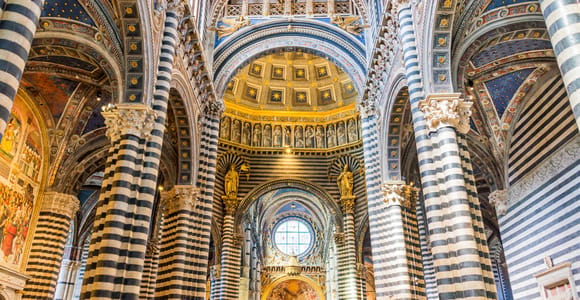
Arrive near opening time and begin at the Duomo. For most independent visitors, the OPA SI PASS with audio guide is the flexible option. It starts at €19.50 and has 3,914 reviews. Its booking description covers the Cathedral, Piccolomini Library, Crypt, Baptistery, Museo dell’Opera, Oratory and Facciatone viewpoint.
Do not try to give every component equal time. Prioritise the cathedral and library, then choose the museum and panorama if views and sculpture matter most. The pass is broader than a single church visit, which is why it can consume the whole morning. Check current opening times and any floor-access restrictions with the Opera del Duomo before the day.
If historical explanation matters more than maximum coverage, the walking tour with skip-the-line Duomo entry starts at €40, lasts two hours and has 1,439 reviews. It combines the centre with the cathedral, but it is not a substitute for exploring every OPA SI PASS site.
Lunch: leave room rather than chasing a list
Walk towards Piazza del Campo through the lanes rather than taking the most direct route. Siena rewards small detours, but its slopes make distances feel longer than they look. Choose a simple lunch outside the most crowded edge of the square if time matters. A three-hour food tour is a valid alternative, though it replaces much of the afternoon rather than fitting invisibly between monuments.
Afternoon: Piazza del Campo and one civic interior
Read the shell-shaped square first, then decide between the Museo Civico and Torre del Mangia. The tower uses timed, limited entries and involves a narrow physical climb. The museum is the better choice for art and for visitors who do not want stairs. Trying to rush both after a full cathedral morning turns the day into a sequence of closing times.
Afterwards, leave the main axis. Walk into one or two contrada streets, notice the fountains and emblems, and treat them as living neighbourhoods rather than themed quarters. If you want the Palio explained, a guided walk is more useful than guessing at symbols.
A workable order
| Part of day | Focus | What to leave out if delayed |
|---|---|---|
| Early morning | Cathedral and Piccolomini Library | Secondary rooms before the essentials |
| Late morning | Museo dell’Opera or Facciatone | Trying to complete every pass site |
| Lunch | One unhurried stop | A cross-city restaurant detour |
| Afternoon | Piazza del Campo and one civic interior | Both tower and museum if time is tight |
| Late afternoon | Contrada streets and a viewpoint | Another paid attraction |
Who needs a different plan?
On Palio days, Piazza del Campo access and circulation change, so this itinerary does not apply unchanged. Travellers with limited mobility should also plan around steep streets and verify each venue rather than assuming one accessible entrance covers an entire complex. If you arrive after lunch, choose the cathedral area or the civic centre as the day’s anchor, not both.
The best one-day visit ends with something deliberately unseen. Siena is compact, not flat or shallow; leaving one museum for another visit produces a better day than collecting four rushed entrances.